

New

Andrew White – VIDEO STORYTELLING. Creative Excellence Class

VIDEO STORYTELLING. Creative Excellence Class
Creative videography, storytelling, shooting and editing in an easy to follow course for intermediates and beginners.
| Download: |
MEGA
|
| Size: | 10 GB |
| Files: | View Files |
| Sales Page: | Link |
| Archive: | Link |
You have to be logged in and our VIP Members to see the Download Links
What you’ll learn
-
You will know how to make videos that will entertain, inspire and even teach an audience.
-
You will be qualified not only to tell a story, but to keep your audience engaged with rich narration, music, sound effects and timing.
-
You will know how to be an entertainer.
-
You will know how to tell a story, using basic video equipment, on any video platform such as YouTube or Vimeo.
-
This course will be particularly value for non-fiction storytellers
Course content
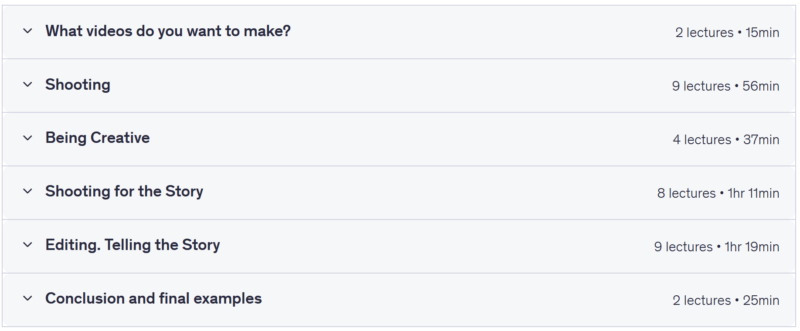
6 sections • 34 lectures • 4h 42m total length
Requirements
-
Any kind of camera that can shoot video. It doesn’t matter what. And you’ll need a microphone.
-
A computer or laptop for video editing. It can’t be really old, but also doesn’t need to be fancy and expensive.
-
Hopefully you have a desire to captivate an audience with your video storytelling skills.
-
You should be able to use a PC or Apple Mac at a basic level.
Who this course is for:
- For anyone who wants to shoot videos, but has some, a little or no previous experience.
- For anyone who wants to start, or has just started a YouTube channel.
- For anyone who has been shooting video for a while, but has not learnt how to create and tell stories.
- Many experienced videographers will learn something here, which will probably be the creative elements taught in this course
- For anyone who has experience shooting still photos, but wants to move into making videos. You will love this course!
What You Get?
You’ll learn these things:
- Different cameras and what makes them different.
- Good videography is less about fancy expensive equipment and more about telling a story.
- How to determine what kind of videos you want to make, and what equipment is needed.
- Camera equipment is the great temptation. How to avoid spending on things that are promoted as needed, when all they do is briefly satisfy the ego.
- How to shoot a scene to tell a story. Shooting is not just about ‘getting great footage’. It’s about capturing elements to tell a story during the shoot.
- Learn the mind space one should use to tell a story as its being shot. This is necessary because creating a story after the footage is shot, sets one up for failure in the edit.
- Why should shooting and editing not be regarded as seperate processes.
- Pans, zooms, top-shots, eye-lines, white-balance, B-roll and more. Not only how to get them right, but why they work in a story. Your footage will look like a pro’s shot it. And when you begin your edit, you’ll love me for it!
- For example, I’ll not only tell you what a pan is, how to shoot a smooth one, but more importantly, why would a pan work in a story. Nobody ever teaches this stuff!
- B-roll footage? Techniques for extreme efficiency in footage gathering.
- Audio. Techniques for extreme efficiency in audio content gathering.
- Editing software choices and links to free edit software that is, surprisingly, absolutely brilliant. It’s also free, and I still use it. Wow!
- Editing techniques. I’ll teach some simple rules that’ll turn your audience’s heads.
- Editing can be intimidating, because in many ways, its the most difficult part. But it’s actually quite easy as long as the footage gathered is done with the story in mind. I’ll teach you how this is done.
- How to avoid the amateur traps; the shooting and editing techniques that might look cool, but actually shout ‘beginner here!’.
- Look like a pro right from the start!
- Music and how to find it, know its right, and use it properly.
- And a lot more.
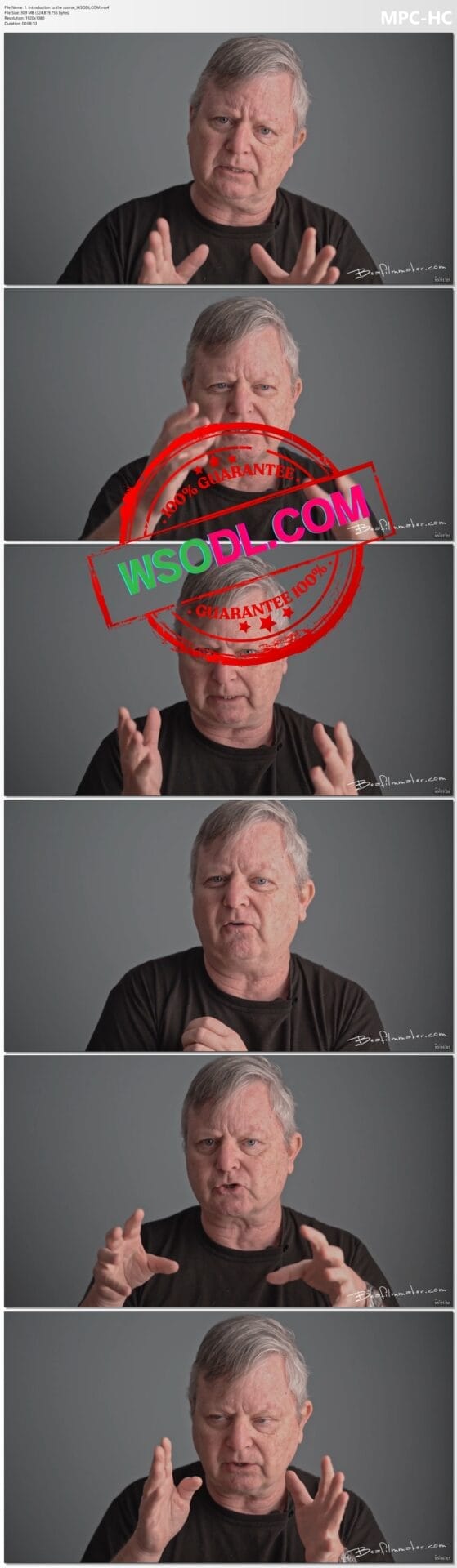
Screenshots taken from videos of the course
You have to be logged in and our VIP Members to see the Download Links
Be the first to review “Andrew White – VIDEO STORYTELLING. Creative Excellence Class”
You must be logged in to post a review.
Reviews
There are no reviews yet.